
Sacroiliac (SI) Joint Injections
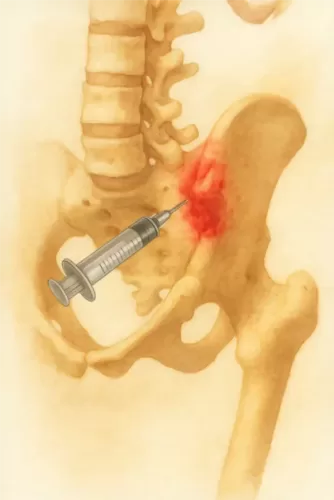
Sacroiliac (SI) Joint Injections are a minimally invasive diagnostic and therapeutic procedure used to treat pain originating from the sacroiliac joint—the area where the lower spine connects to the pelvis. This joint can become inflamed or dysfunctional due to injury, arthritis, pregnancy, or repetitive stress, resulting in chronic lower back pain that may radiate into the hips, buttocks, or thighs.
These injections combine a local anesthetic and a corticosteroid to reduce inflammation and confirm whether the SI joint is the source of pain. If pain relief occurs after the injection, it helps guide the treatment plan moving forward, potentially including physical therapy, long-term injections, or other interventional procedures.
How It Works
The procedure is performed under sterile conditions with the guidance of fluoroscopy (real-time X-ray) to ensure accuracy and safety. After numbing the skin, your provider will insert a thin needle directly into the SI joint. A contrast dye is used to confirm proper needle placement, and then a mixture of anesthetic and steroid medication is slowly injected into the joint space.
The local anesthetic provides immediate (though temporary) relief, helping confirm the SI joint as the pain source. The corticosteroid then works over the next several days to reduce inflammation and provide longer-lasting pain relief.
The entire procedure usually takes 15–30 minutes and is done on an outpatient basis, meaning you can go home the same day.
Conditions Treated
Sacroiliac Joint Injections are used for the diagnosis and management of:
- Sacroiliac Joint Dysfunction
- Inflammatory Sacroiliitis
- Degenerative arthritis of the SI joint
- Post-traumatic SI joint pain (e.g., from a fall or car accident)
- Pregnancy-related pelvic pain
- Post-lumbar fusion stress-related SI joint pain
- Chronic lower back and gluteal pain without a clear spinal origin
Frequently Asked Questions (FAQs)
How do I know if my SI joint is the source of my pain?
SI joint pain often mimics other types of back pain, which is why a diagnostic injection is so helpful. If you experience significant relief from the injection, it confirms that the SI joint is contributing to your symptoms.
Is the procedure painful?
You may feel some pressure during the injection, but discomfort is usually minimal. A local anesthetic is used to numb the area, and most patients tolerate the procedure well.
How long does the relief last?
Initial relief from the anesthetic may last a few hours, while the steroid’s anti-inflammatory effects typically begin within a few days and can last weeks to months depending on the individual.
Can I return to normal activities after the procedure?
Yes. Most patients can return to work and daily routines the next day. Strenuous activity should be avoided for 24–48 hours.
What happens if it doesn't work?
If the injection does not relieve your symptoms, further diagnostic testing or alternative treatments like radiofrequency ablation or physical therapy may be recommended.
What Types of Results Can I Expect?
If the SI joint is the true source of pain, patients often report:
- Immediate, short-term pain relief from the anesthetic
- A noticeable reduction in pain, stiffness, and inflammation within 2–5 days
- Improved ability to move, walk, and sleep
- Reduced need for oral pain medications
- Greater participation in physical therapy or rehab
For many, the injection provides several weeks to months of relief. If successful, the procedure may be repeated or followed by other treatments like radiofrequency ablation for longer-lasting results.
Bibliography
Mayo Clinic. (2023). Sacroiliac Joint Dysfunction and Pain Management. Retrieved from https://www.mayoclinic.org
American Academy of Orthopaedic Surgeons (AAOS). (2023).
SI Joint Injections for Pain Relief. Retrieved from https://www.aaos.org
National Institute of Neurological Disorders and Stroke (NINDS). (2023).
Understanding Sacroiliac Joint Pain and Treatment Options. Retrieved from https://www.ninds.nih.gov