
Percutaneous Discectomy
Percutaneous discectomy is a minimally invasive spinal procedure designed to remove small portions of a herniated disc that are pressing on a nearby nerve root. It offers patients relief from nerve-related symptoms like radiating pain, numbness, tingling, or weakness—without the need for open back surgery.
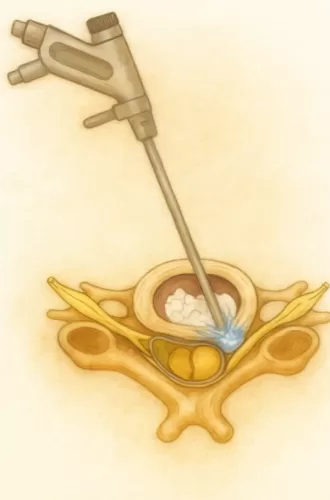
How It Works
Using real-time imaging (typically fluoroscopy), a small needle or probe is guided into the affected spinal disc. A portion of the herniated disc material is then removed using specialized tools—relieving pressure on the nearby spinal nerve.
Key points:
- Performed under local anesthesia and mild sedation
- No large incisions or stitches required
- Procedure typically lasts 30–60 minutes
By reducing nerve compression, the procedure helps alleviate symptoms and improve mobility—without altering the natural structure of the spine.
Conditions Treated
- Herniated discs (lumbar or cervical)
- Sciatica or leg pain due to disc bulge
- Radiculopathy (nerve pain radiating from the spine)
- Mild to moderate disc protrusions causing nerve impingement
- Low back or neck pain unresponsive to conservative treatment
It is most effective when nerve compression is caused by soft disc material and symptoms are localized or radiating.
Frequently Asked Questions (FAQs)
What’s the difference between this and traditional surgery?
Unlike open discectomy, percutaneous discectomy does not require large incisions, general anesthesia, or lengthy recovery. It’s done through a small puncture using imaging guidance and typically has fewer risks and a quicker return to normal activity.
Will I be asleep during the procedure?
No. It is usually performed under local anesthesia with light sedation, so you’ll be relaxed but awake and able to communicate if needed.
Is this covered by insurance?
In many cases, yes—especially if conservative treatments have failed. Our team will verify your coverage before scheduling.
Does this remove the entire disc?
No. Only the portion of the disc that is compressing the nerve is removed. The rest of the disc is preserved to maintain stability.
How soon will I feel relieved?
Some patients feel immediate relief, while others may improve gradually over a few days to weeks as inflammation decreases and the nerve heals.
What Types of Results Can I Expect?
- Significant pain reduction in the affected arm or leg
- Improved mobility and function
- Avoidance of open surgery for many candidates
- Faster recovery compared to traditional procedures
- Sustained relief when combined with physical therapy or lifestyle adjustments
Many patients return to work or daily activity within a few days to one week, depending on their condition and response to treatment.
Bibliography
Mayo Clinic. (2023). Minimally Invasive Spine Surgery. Retrieved from https://www.mayoclinic.org
American Association of Neurological Surgeons (AANS). (2023).
Percutaneous Discectomy for Disc Herniation. Retrieved from https://www.aans.org
National Institute of Neurological Disorders and Stroke (NINDS). (2023).
Understanding Spine Conditions and Treatments. Retrieved from https://www.ninds.nih.gov