
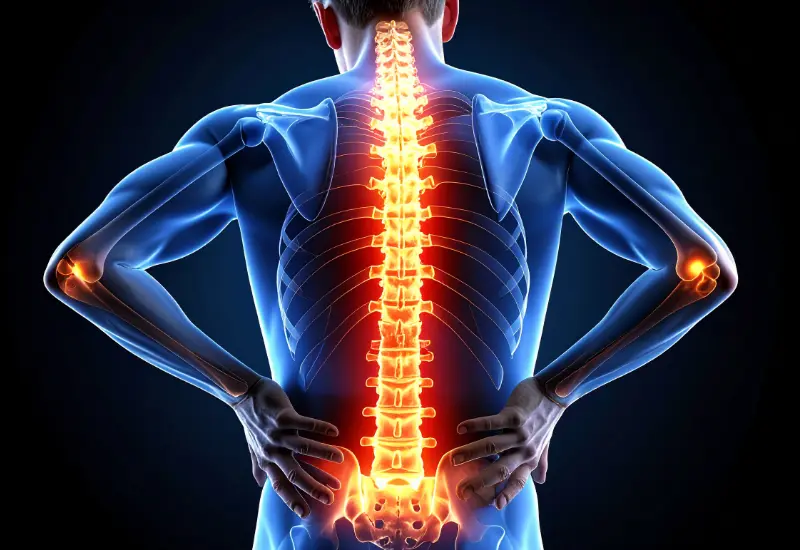
When spine pain strikes, it’s natural to wonder what’s happening inside your body. Is it just a pulled muscle, or could something more serious be at play? Understanding the root causes of spine pain isn’t just about satisfying curiosity—it’s about getting the right treatment and preventing future problems.
The spine is remarkably complex, with multiple structures that can contribute to pain. From the vertebrae and discs to the muscles, ligaments, and nerves, each component plays a crucial role in both movement and pain perception. When something goes wrong, the resulting discomfort can range from mild annoyance to debilitating agony.
Modern diagnostic techniques have revolutionized our understanding of spine pain, allowing healthcare providers to identify specific causes rather than simply treating symptoms. This precision has led to more effective treatments and better outcomes for patients dealing with chronic spine conditions.
The Anatomy of Spine Pain
To understand what’s causing your pain, it helps to know the key players in your spine’s complex structure. Each component can contribute to pain in different ways, and often multiple structures are involved simultaneously.
The Vertebrae and Joints Your spine consists of 24 movable vertebrae, each connected by facet joints that allow for movement while providing stability. These joints can become arthritic over time, leading to inflammation and pain. When facet joints become inflamed or worn, they can cause localized back pain that often worsens with movement, particularly bending backward or twisting.
Intervertebral Discs Between each vertebra sits a disc that acts as a shock absorber and allows for spinal movement. These discs consist of a tough outer ring (annulus fibrosus) and a gel-like center (nucleus pulposus). When the outer ring tears or weakens, the inner material can bulge or herniate, potentially pressing on nearby nerves and causing pain that radiates down the arms or legs.
Muscles and Ligaments The spine is supported by an intricate network of muscles and ligaments that provide stability and enable movement. These soft tissues can become strained, torn, or inflamed, leading to localized pain and muscle spasms. Poor posture, sudden movements, or overuse can all contribute to muscle and ligament problems.
Common Structural Problems
Understanding the most frequent structural issues can help explain why spine pain develops and persists. These conditions often develop gradually, sometimes without obvious symptoms until they become severe.
Degenerative Disc Disease Despite its name, degenerative disc disease isn’t actually a disease—it’s a natural part of aging. As we get older, our discs gradually lose water content and become less flexible. This process can lead to disc height loss, increased stress on surrounding structures, and sometimes pain.
However, it’s important to note that not everyone with degenerative changes experiences pain. Many people have significant disc degeneration visible on imaging studies but feel perfectly fine. The key is understanding when these changes become symptomatic and require treatment.
Spinal Stenosis Spinal stenosis occurs when the spaces within the spine narrow, potentially compressing the spinal cord or nerve roots. This narrowing can result from various factors, including arthritis, ligament thickening, or disc problems. Patients with spinal stenosis often experience pain and numbness that worsens with walking and improves with sitting or bending forward.
Herniated Discs When a disc’s outer layer tears and allows inner material to escape, it can press on nearby nerves, causing pain, numbness, or weakness. Herniated discs can occur suddenly due to injury or gradually due to wear and tear. The location of the herniation determines which nerves are affected and where symptoms appear.
The Role of Inflammation
Inflammation plays a crucial role in many spine pain conditions, often serving as both a cause and a consequence of structural problems. When tissues are injured or irritated, the body’s inflammatory response kicks in, bringing healing cells to the area but also causing swelling and pain.
Acute vs. Chronic Inflammation Acute inflammation is the body’s normal response to injury and typically resolves as healing occurs. However, chronic inflammation can persist long after the initial injury, contributing to ongoing pain and potentially causing additional tissue damage.
Understanding the inflammatory component of spine pain has led to more targeted treatments, including anti-inflammatory medications, steroid injections, and lifestyle modifications that can help reduce inflammation naturally.
Nerve-Related Pain Sources
Some of the most challenging spine pain conditions involve the nervous system. When nerves become compressed, irritated, or damaged, they can produce symptoms that extend far beyond the spine itself.
Radiculopathy Radiculopathy occurs when a nerve root becomes compressed or irritated, typically causing pain that radiates along the nerve’s path. In the lower back, this often results in sciatica—pain that travels down the buttock and leg. In the neck, radiculopathy can cause pain that extends into the shoulder, arm, and hand.
Neuropathic Pain Sometimes nerves themselves become damaged, leading to neuropathic pain characterized by burning, tingling, or electric shock-like sensations. This type of pain can be particularly challenging to treat because it doesn’t respond well to traditional pain medications.
Lifestyle and Environmental Factors
While structural problems often get the most attention, lifestyle and environmental factors play a significant role in spine pain development and persistence. Understanding these factors can help prevent pain and improve treatment outcomes.
Postural Problems Modern life often involves prolonged sitting, forward head posture, and repetitive activities that can stress the spine. Poor posture doesn’t just affect how you look—it can alter the normal curves of your spine and increase stress on certain structures.
Physical Deconditioning Weak core muscles, poor flexibility, and overall physical deconditioning can contribute to spine pain. When the muscles that support your spine are weak or imbalanced, other structures must work harder to maintain stability, potentially leading to pain and injury.
Occupational Factors Certain occupations carry higher risks for spine problems. Jobs involving heavy lifting, prolonged sitting, vibration exposure, or repetitive motions can contribute to spine pain development. Understanding these risks can help with prevention and treatment planning.
The Complexity of Pain Perception
One of the most important concepts in understanding spine pain is that structural problems don’t always correlate directly with pain levels. Some people with significant structural abnormalities experience little or no pain, while others with minor changes suffer considerably.
Central Sensitization In some cases, the nervous system becomes hypersensitive, amplifying pain signals and making normal sensations feel painful. This phenomenon, called central sensitization, helps explain why some people experience persistent pain even after structural problems have been addressed.
Psychological Factors Stress, anxiety, depression, and other psychological factors can influence pain perception and recovery. This doesn’t mean the pain is “all in your head”—rather, it reflects the complex interaction between physical and psychological factors in pain experience.
Diagnostic Challenges
Identifying the exact cause of spine pain can be challenging, even with advanced diagnostic tools. Multiple structures can contribute to pain simultaneously, and some pain sources don’t show up clearly on imaging studies.
Imaging Limitations While MRI and CT scans provide detailed images of spine structures, they don’t always identify the source of pain. Many structural abnormalities visible on imaging are also present in people without pain, making it difficult to determine which findings are clinically relevant.
The Importance of Clinical Correlation Effective diagnosis requires correlating imaging findings with clinical symptoms and physical examination results. This is where the expertise of spine specialists becomes crucial—they can interpret diagnostic information in the context of each patient’s unique situation.
Modern Understanding of Pain Mechanisms
Recent advances in pain research have revealed that spine pain is more complex than previously thought. Pain doesn’t simply result from tissue damage—it involves sophisticated processing by the nervous system that can be influenced by many factors.
Neuroplasticity The nervous system’s ability to change and adapt, called neuroplasticity, plays a role in both pain development and recovery. Understanding these mechanisms has led to new treatment approaches that target the nervous system’s response to pain.
Biomarkers and Genetics Research is revealing that genetic factors may influence pain sensitivity and treatment response. While still in early stages, this research may eventually lead to more personalized approaches to spine pain treatment.
The Path Forward
Understanding the root causes of spine pain is the first step toward effective treatment. However, this understanding must be combined with appropriate diagnostic testing and expert clinical judgment to develop effective treatment plans.
Comprehensive Evaluation Effective spine care begins with a thorough evaluation that considers all potential pain sources. This typically includes detailed history taking, physical examination, and appropriate imaging studies when indicated.
Targeted Treatment Once the pain source is identified, treatment can be specifically targeted to address the underlying problem. This might involve addressing inflammation, decompressing nerves, stabilizing unstable segments, or strengthening supporting structures.
Conclusion
Understanding what’s really going on with your spine pain is crucial for effective treatment and prevention. While spine pain can result from numerous causes—from structural problems and inflammation to nerve irritation and lifestyle factors—modern diagnostic techniques and treatment approaches offer hope for lasting relief.
The key is working with specialists who understand the complexity of spine pain and can identify the specific factors contributing to your condition. At AllSpine Health Clinic, our comprehensive approach to spine care begins with thorough evaluation to understand the root causes of your pain. From there, we develop targeted treatment plans that address the underlying problems rather than just masking symptoms.
Remember, spine pain isn’t something you have to live with. By understanding what’s causing your pain and working with experienced spine specialists, you can develop an effective treatment plan that addresses the root causes and helps you return to the activities you enjoy. The journey to understanding your spine pain is the first step toward lasting relief and improved quality of life.