
Rotator Cuff Injury
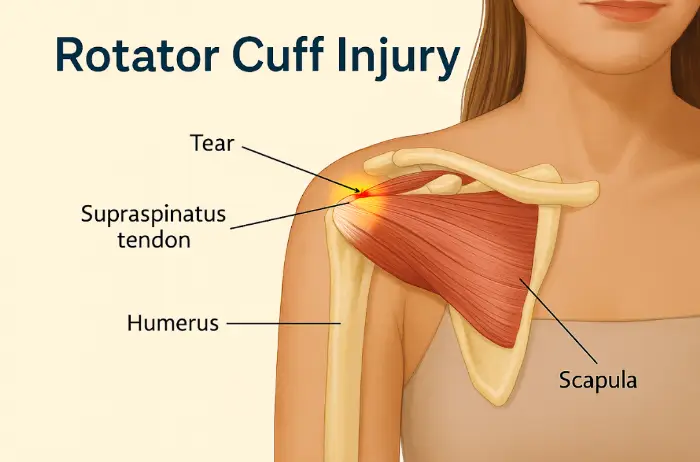
A rotator cuff injury occurs when the group of muscles and tendons surrounding the shoulder joint becomes strained, torn, or inflamed. These structures are essential for shoulder stability and movement. When damaged, patients often experience pain with overhead motion, weakness when lifting, and reduced shoulder mobility.
Causes
Rotator cuff injuries can result from a variety of acute or chronic stressors, including:
- Repetitive overhead motions (common in athletes, manual laborers, and mechanics)
- Traumatic injury (e.g., a fall or lifting something heavy)
- Age-related degeneration of tendons, making them more prone to tears
- Poor posture or shoulder mechanics, placing excess strain on tendons
- Shoulder impingement, where the tendons are compressed under the bone
In many cases, these injuries develop gradually, starting with inflammation (tendinitis) and potentially progressing to partial or complete tears.
Commonly Affected
Rotator cuff injuries are most frequently seen in:
- Adults over age 40, especially with degenerative changes in tendon structure
- Athletes involved in overhead sports like baseball, tennis, and swimming
- Workers in repetitive lifting or overhead jobs (e.g., painters, carpenters)
- Individuals with poor shoulder posture or chronic shoulder overuse
- People with a previous history of shoulder instability or impingement
Symptoms often include pain while lifting the arm, weakness in the shoulder, night-time discomfort, or difficulty reaching behind the back.
Treatments Available
Our treatment philosophy prioritizes function, pain relief, and conservative management whenever possible. Available treatments at AllSpine Pain and Wellness include:
- Corticosteroid Injections: Provides rapid relief of pain and inflammation in cases of severe discomfort or limited mobility.
- Minimally Invasive Arthroscopic Repair: If conservative treatment fails and a tendon is significantly torn, arthroscopy may be recommended to restore function.
Each plan is tailored to the severity of the injury, patient activity level, and long-term goals.
Frequently Asked Questions (FAQs)
How do I know if I have a rotator cuff tear or just tendinitis?
Both conditions cause pain and weakness, but a tear may result in more significant loss of strength or function. Imaging such as MRI or ultrasound helps confirm the diagnosis.
Can a rotator cuff injury heal without surgery?
Yes, many rotator cuff injuries—especially partial tears and tendinitis—respond well to conservative care including therapy and injections.
Is PRP better than steroid injections?
PRP aims to heal the tendon long-term, while steroids offer quicker short-term pain relief. Your provider can help determine which is best for your situation.
How long does it take to recover from a rotator cuff injury?
Recovery varies, but most patients improve within 6–12 weeks with proper rehabilitation. More severe tears or post-surgical cases may take longer.
When should I consider surgery?
Surgery is considered when pain persists despite conservative treatment or if a complete tendon tear causes significant weakness or loss of function.
Bibliography
Mayo Clinic. (2023). Rotator Cuff Injury. Retrieved from https://www.mayoclinic.org
American Academy of Orthopaedic Surgeons (AAOS). (2023). Shoulder Injuries and Conditions. Retrieved from https://www.aaos.org
National Institute of Arthritis and Musculoskeletal and Skin Diseases (NIAMS). (2023). Rotator Cuff Disorders. Retrieved from https://www.niams.nih.gov