
Lumbar Spondylosis (Arthritis of the Lower Back)
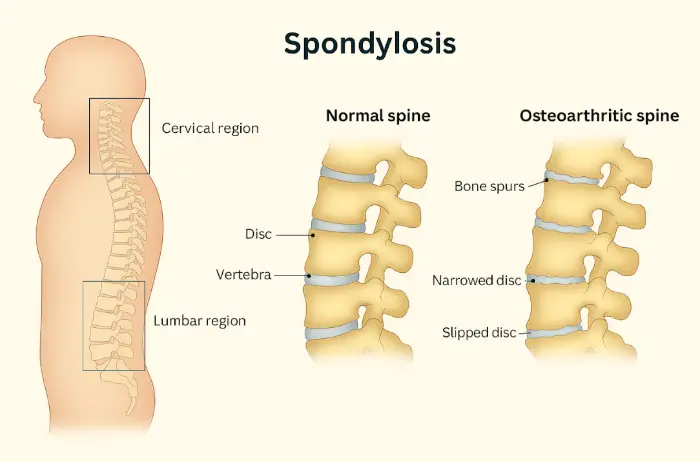
Lumbar spondylosis refers to age-related degeneration of the lower spine. Often described as arthritis of the back, it results from gradual wear and tear of the spinal discs, joints, and bones. While some people remain asymptomatic, others may experience chronic low back pain, stiffness, and reduced mobility that worsens over time.
Causes
Lumbar spondylosis typically develops due to long-term stress on the spine and natural aging, but other factors can accelerate its progression:
- Degenerative disc disease: Discs lose water content and elasticity, leading to collapse or bulging.
- Facet joint arthritis: The joints that enable spine movement become inflamed and worn out.
- Bone spurs (osteophytes): The body may form extra bone as a response to disc collapse, which can narrow nerve pathways.
- Repetitive strain or injury: Physical labor, poor posture, or previous trauma can accelerate degeneration.
These changes may lead to nerve root irritation or spinal stenosis, contributing to more severe symptoms.
Commonly Affected
Lumbar spondylosis primarily affects:
- Adults over age 50, due to progressive spinal degeneration
- People with a history of back strain or injury
- Individuals with sedentary lifestyles or poor posture
- Patients with jobs involving heavy lifting or repetitive bending
- Those with a family history of spinal disorders
It often presents with chronic low back pain, stiffness after prolonged rest, and sometimes radiating leg symptoms if nerve roots are involved.
Treatments Available
AllSpine Pain and Wellness offers a range of targeted treatments that are designed to relieve pain, reduce inflammation, and improve spinal function:
- Facet Joint Injections: Anti-inflammatory medication is injected into arthritic spinal joints to relieve localized pain.
- Radiofrequency Ablation (RFA): A minimally invasive procedure that uses heat to disable the nerves transmitting pain from the affected joints, providing long-lasting relief.
- Epidural Steroid Injections: Helps reduce inflammation and irritation around compressed nerve roots.
Treatment plans are always tailored to each patient’s needs, severity of symptoms, lifestyle, and personal goals.
Frequently Asked Questions (FAQs)
Is lumbar spondylosis the same as arthritis?
Yes. Lumbar spondylosis is a form of spinal osteoarthritis that affects the lower back. It involves joint inflammation and disc degeneration over time.
Can lumbar spondylosis cause leg pain?
Yes. If the condition compresses or irritates nearby nerve roots, it may lead to symptoms like radiating leg pain, numbness, or tingling—similar to sciatica.
How do I know if I need RFA or injections?
A thorough physical exam and imaging (such as X-ray or MRI) will help determine the source of your pain and guide your treatment plan. Diagnostic blocks are often used to identify if RFA is appropriate.
Will I need surgery for lumbar spondylosis?
In most cases, no. Conservative and interventional treatments can effectively manage symptoms. Surgery is considered only if symptoms are severe and unresponsive to other therapies.
How long does it take to see improvement?
Relief varies depending on the treatment. Some patients feel better within days of an injection, while others experience gradual improvement over weeks with therapy or ablation.
Bibliography
Mayo Clinic. (2023). Lumbar Spondylosis. Retrieved from https://www.mayoclinic.org
American Academy of Orthopaedic Surgeons (AAOS). (2023). Degenerative Spine Conditions. Retrieved from https://www.aaos.org
National Institute of Neurological Disorders and Stroke (NINDS). (2023). Low Back Pain Fact Sheet. Retrieved from https://www.ninds.nih.gov